Alphabet Coloring Activity Numbers: Practical Tools for Learning, Teaching, and Creative Development
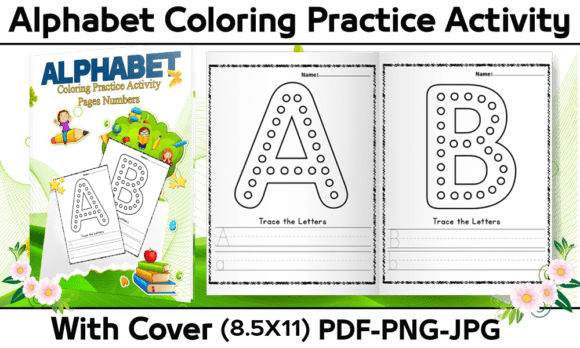
Alphabet Coloring Activity Numbers isn’t just another printable—it’s a versatile, purpose-built resource designed to bridge early literacy, fine motor development, and creative expression. At its core, it’s a 36-page collection of high-resolution, A4-sized (8.5″ × 11″) activity pages where each letter of the alphabet is paired with its corresponding number (A=1, B=2, etc.), presented in bold, traceable outlines ready for coloring, handwriting practice, or visual reinforcement. What sets it apart is how thoughtfully it balances structure and flexibility: every page supports multiple learning modes—visual recognition, tactile tracing, color-based memory cues, and number-letter association—all while delivering professional-grade print quality.
Where This Resource Fits Into Real Life—Not Just Classrooms
You don’t need a teaching credential to get value from Alphabet Coloring Activity Numbers. Its strength lies in adaptability across everyday roles and routines:
- Parents homeschooling or supporting early learners: Picture weekday mornings before kindergarten—your child traces “C = 3” while naming animals that start with C and counting three crayons. The dual focus on letter shape, sound, and quantity builds neural connections more effectively than isolated drills. Because the pages are high-contrast and uncluttered, kids stay engaged longer—and you gain quiet, focused minutes without screen time.
- Early childhood educators building differentiated stations: In a mixed-age preschool or pre-K setting, one child might color the entire “M = 13” page, another might trace the uppercase M with a finger, and a third might cut out the number 13 and paste it beside a photo of 13 buttons they counted. The editable PSD cover and layered source files let you customize labels, add student names, or swap fonts to match your classroom’s visual language—no design skills required.
- Occupational therapists and special educators: For children working on pencil control, hand strength, or sensory regulation, the thick, clean outlines provide ideal resistance for crayon pressure practice. The consistent A4 size means pages fit standard clipboards or slant boards. And because the PDF is print-ready for KDP, you can bind a personalized workbook for a specific learner—adding reinforcement stickers, laminating key pages, or pairing letters with real-world photos (e.g., “T = 20” next to a picture of 20 tiles in the hallway).
- Creative professionals and content creators: If you design educational printables, curriculum kits, or bilingual learning tools, the included PSD cover and editable layers mean you can rebrand the entire set in under an hour—swap colors to match your brand palette, add a logo, adjust spacing for multilingual text, or even isolate individual letters for social media snippets. The PNG and JPG exports make it easy to drop elements into Canva templates or digital lesson slides.
Who Benefits Beyond the Obvious—and How
It’s easy to assume Alphabet Coloring Activity Numbers is only for preschoolers—but its utility ripples outward. Consider these less obvious users:
- ESL and adult literacy tutors: Learners new to English often benefit from concrete, multisensory anchors. Pairing “F = 6” with six familiar words (“fork,” “fish,” “fan,” “flower,” “flag,” “frog”) turns abstract symbols into memorable patterns. The clean layout avoids cognitive overload—a critical factor for adults rebuilding foundational literacy skills.
- Senior activity coordinators in assisted living communities: Letter-number associations support cognitive maintenance. Tracing “L = 12” while recalling 12 U.S. states—or coloring “R = 18” while listing 18 recipes—offers gentle mental engagement with personal relevance. The large, clear forms reduce eye strain, and the A4 size fits standard tabletop easels used in group sessions.
- Art therapists and counselors: Letters carry emotional weight (“G for gratitude,” “H for hope”). Using Alphabet Coloring Activity Numbers as a low-pressure entry point—“Pick a letter that feels like today”—can open nonverbal reflection. The tactile act of coloring within defined shapes provides grounding, especially when paired with mindful breathing or journaling prompts.
What to Keep in Mind Before You Print, Teach, or Adapt
While Alphabet Coloring Activity Numbers is built for ease, thoughtful use makes all the difference:
- Match the tool to the goal—not the other way around. If handwriting fluency is the priority, focus on tracing with pencils or styluses before adding color. If vocabulary expansion matters more, leave space beside each letter for drawing or writing words. The PDF doesn’t dictate pace or method—it enables your intent.
- Print quality matters for usability. Because it’s KDP-ready and print-optimized, the PDF renders crisply on both home inkjets and commercial printers. But if you’re printing at scale (e.g., for a daycare center), test one page first—especially on recycled paper—to ensure line thickness remains legible after feeding through multiple trays.
- Edit wisely, not exhaustively. The PSD file gives full control—but resist over-customizing early on. Start by changing only what directly supports your audience: font size for older learners, background tint for visual processing needs, or simplified numbering (1–10 only) for younger groups. Save complex edits for iteration, not launch.
- Consider context, not just content. A child who struggles with sitting still may benefit more from coloring the letters on a large whiteboard or sidewalk chalk than on paper. An adult learner might prefer typing the associations into a notes app alongside voice memos. Alphabet Coloring Activity Numbers serves as a springboard—not a script.
Strengths That Stand Out in Practice
This isn’t generic clipart repackaged. Its strengths emerge where theory meets daily reality:
- Consistent visual hierarchy: Each page uses the same spatial logic—uppercase letter top-left, number bottom-right, ample white space—so attention goes to learning, not decoding layout.
- No hidden surprises: All 36 pages are numbered and organized sequentially (A–Z + extras like “AA” or “ZZ” for extension), so finding “Q = 17” takes seconds, not scrolling.
- Format flexibility without compromise: The PDF works instantly; the PNGs let you isolate letters for digital flashcards; the PSD cover ensures your branding stays cohesive—even if you’re bundling this with math or phonics resources.
- Designed for repetition, not one-time use: Thick outlines hold up to erasing, tracing overlays, or light watercolor washes—meaning the same page can serve different purposes across weeks or months.
A Note on Limitations—So You Can Plan Around Them
No single resource covers everything—and that’s okay. Alphabet Coloring Activity Numbers intentionally focuses on letter-number pairing and handwriting readiness. It doesn’t include phonics rules, sight word lists, or interactive digital components. That’s by design: it excels where clarity, consistency, and physical engagement matter most. If your goal involves audio reinforcement, animated explanations, or adaptive feedback, pair it with complementary tools—but let this do what it does best: give hands something meaningful to do while the brain makes connections.