Home Interior Coloring Pages
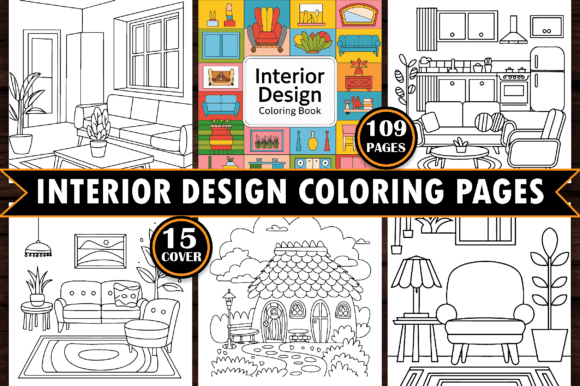
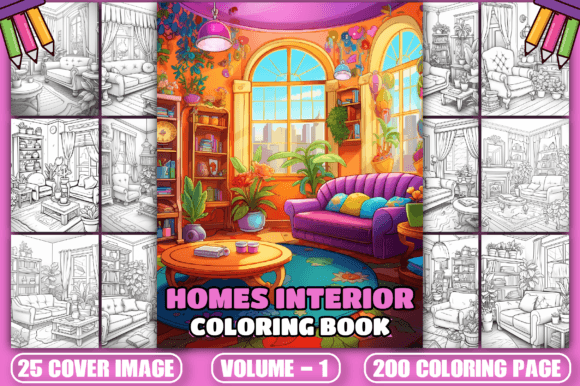
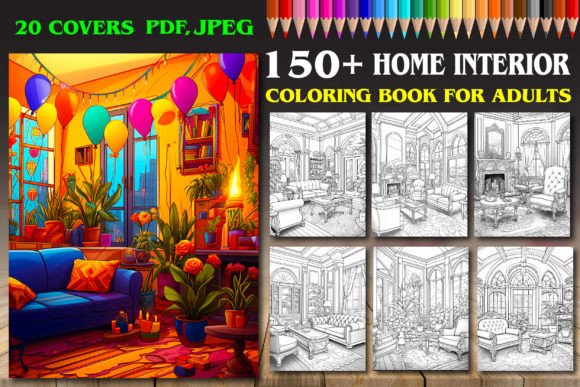
Home Interior Coloring Pages aren’t just line drawings of sofas and floor plans—they’re immersive, detail-rich invitations to slow down, observe, and reimagine the spaces we live in. Designed specifically for adults, these coloring pages transform familiar domestic environments—living rooms with textured rugs, sunlit kitchens with open shelving, cozy reading nooks, minimalist bedrooms, and even stylized home offices—into mindful creative exercises. Each illustration balances architectural accuracy with artistic flair: think exposed brick walls beside soft watercolor-style shadows, or mid-century furniture rendered with clean linework that invites both precision and playful interpretation.
Where Real Life Meets Creative Pause
Unlike generic floral or mandala pages, Home Interior Coloring Pages resonate because they mirror daily experience. A busy project manager might print one before a 7 a.m. team call—not to “finish” it, but to ground herself in the quiet rhythm of shading a wooden coffee table. A new homeowner, overwhelmed by renovation decisions, uses the pages to experiment visually: “What if my accent wall were deep teal? What if I swapped the pendant light for something sculptural?” It’s low-stakes design thinking—no permits, no budget spreadsheets, just color and curiosity.
Teachers and therapists also find unexpected utility here. A middle school art educator uses the kitchen scenes to spark discussions about spatial layout, proportion, and cultural differences in home design—students compare how breakfast nooks appear in Scandinavian, Japanese, and Texan homes, then color their interpretations. Meanwhile, occupational therapists working with adults recovering from anxiety or burnout report that clients consistently choose interior pages over abstract ones. Why? Because the recognizable context—windows, doorways, furniture—provides psychological safety. Filling in the grout lines of a subway tile backsplash becomes an anchor during moments of dissociation.
More Than Just Relaxation—A Practical Creative Tool
For designers, architects, and DIY renovators, Home Interior Coloring Pages serve as tactile mood boards. Instead of scrolling endlessly through Pinterest, you can physically test palettes: try warm ochre on hardwood floors alongside cool gray cabinetry, then switch to sage green and walnut tones on the same page. The A4 (8.5×11 inch) sizing isn’t arbitrary—it matches standard printer paper *and* fits neatly into most sketchbook rings or framing mats. Many users scan their finished pages, overlay them digitally onto real room photos, or use them as reference thumbnails when briefing contractors.
Parents raising kids with sensory sensitivities sometimes adapt these pages collaboratively: they simplify a complex living room scene together, tracing outlines onto larger paper or adding tactile elements like fabric swatches glued to the rug area. It’s not about perfection—it’s about shared attention, spatial vocabulary building, and co-regulation through structured creativity.
Who Benefits—and How They Use Them Differently
- Remote workers: Print a home office scene and color it during a midday reset. The act of choosing where to place “light” (yellow highlights on monitor edges) or “shadow” (soft gray behind bookshelves) subtly reinforces ergonomic awareness—without a single productivity tip.
- Empty nesters: One user shared how coloring a sunroom filled with potted plants helped her process the emotional shift after her youngest moved out. She didn’t color the furniture—but spent hours rendering every leaf, stem, and patterned cushion, turning grief into gentle observation.
- KDP creators: The included 20 high-res PNG cover files (300 DPI) are optimized for Amazon KDP formatting—no cropping surprises, no pixelation at thumbnail size. Designers layer textures, add subtle gradients, or insert custom typography directly onto these files, knowing the interior illustrations will scale cleanly across paperback, hardcover, and digital previews.
- ESL educators: Interior pages double as visual vocabulary builders. Students label items (“ottoman,” “shiplap,” “pendant light”), describe spatial relationships (“The lamp is next to the armchair”), or write short narratives (“This is my dream kitchen—I cook here every Sunday”).
Things to Keep in Mind Before You Start
While Home Interior Coloring Pages offer wide appeal, a few practical considerations help maximize your experience. First, the JPEG format means each page is ready to print instantly—but if you plan to resize significantly (e.g., enlarging a fireplace scene to poster size), the PDF version preserves vector-like clarity better than scaling individual JPEGs. Second, the 150+ pages vary in complexity: some feature fine detailing like woven basket textures or intricate tile grout patterns; others use bolder, more forgiving lines ideal for colored pencils or gel pens. Skimming the preview thumbnails helps match your current energy level—a detailed library scene may feel restorative on a calm Sunday, but overwhelming after a chaotic workday.
Also worth noting: these aren’t “decorating guides.” You won’t find measurements, brand labels, or material specs. That’s intentional. The goal isn’t replication—it’s reinterpretation. If you color a modern bathroom with vintage brass fixtures and terrazzo flooring, that’s not “wrong.” It’s your interior language emerging on paper.
Why Quality Matters—Beyond the Lines
The 300 DPI resolution does more than prevent jagged edges. It ensures that subtle details—like the grain direction in a wooden floorboard or the layered folds of a linen curtain—remain legible even when printed on matte or textured paper. That fidelity supports deeper engagement: your eye lingers longer, your hand slows down, your breath settles. One longtime user told us she prints two copies of the same page—one for testing color combos, one for her “final version”—because the crispness makes the process feel intentional, not disposable.
And while the collection leans toward contemporary and transitional interiors, it avoids rigid trends. There are no influencer-perfect “neutral” rooms devoid of personality. Instead, you’ll find built-in bookshelves overflowing with varied spines, mismatched dining chairs, and windows framed by imperfectly draped curtains—spaces that feel lived-in, human, and quietly generous with possibility.
A Space to Return To—Again and Again
Home Interior Coloring Pages don’t ask you to build anything. They don’t require tools, training, or outcomes. They simply hold space—on the page, and within you—for noticing, choosing, and returning to the quiet dignity of everyday surroundings. Whether you’re sketching over a finished page to imagine a new layout, gifting a colored version to a friend moving into their first apartment, or taping your favorite scene to your fridge as a reminder of the calm you’re cultivating—these pages meet you where you are. Not as a project to complete, but as a place to pause, breathe, and remember: your home, in all its versions, is always worth coloring in.