Alphabet Flower Coloring Book for Toddle
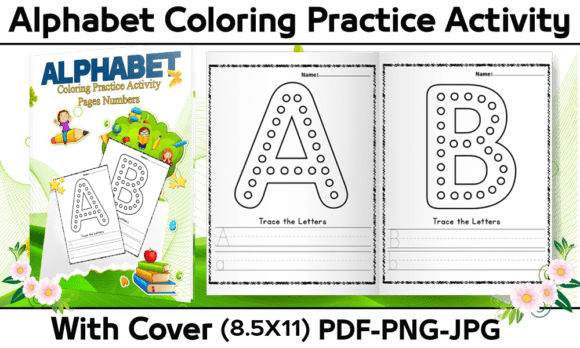
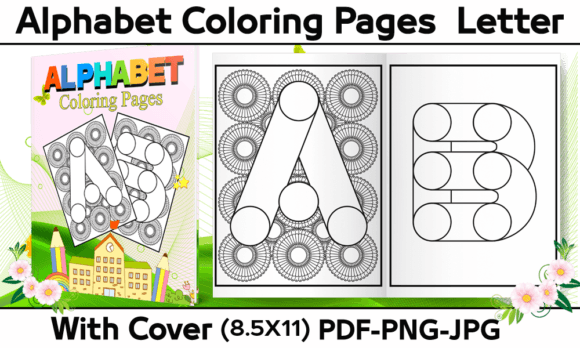
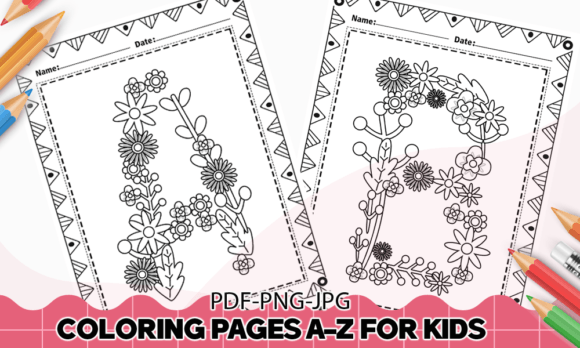
If you’ve ever tried to keep a toddler engaged while reinforcing early literacy—without resorting to screen time—you know how rare it is to find something that’s both educationally grounded and genuinely fun. The Alphabet Flower Coloring Book for Toddle bridges that gap in a surprisingly thoughtful way: each letter of the alphabet blooms into a whimsical, botanically inspired illustration—A for Apple Blossom, B for Bluebell, C for Crocus—and invites little hands to color, trace, and explore at their own pace.
Where This Coloring Book Fits Into Real Life
It’s not just another printable—it’s a flexible tool that adapts to different rhythms and needs. A preschool teacher might use the A4-sized pages (8.5″ x 11″) as part of a weekly “Letter + Nature” station, pairing page D (Daffodil) with a short walk outside to spot real daffodils. A parent juggling remote work and childcare might print two copies—one for coloring, one laminated for dry-erase tracing—and rotate them every few days to maintain freshness. A speech-language pathologist could use the flower-letter pairings during articulation practice (“Say ‘L’ like Lily—now draw the stem!”), turning phonemic awareness into tactile play.
Even homeschooling families report unexpected wins: one mom shared how her 3-year-old began asking, “What letter does this flower start with?” while flipping through garden books—proof that visual association had quietly taken root. And because the designs are intentionally uncluttered (no tiny details or overwhelming line work), children with developing fine motor skills or sensory sensitivities can participate without frustration.
Who Benefits—and How
Educators and Early Childhood Providers: With 26 pages—one per letter—the book aligns cleanly with standard preschool curricula. No need to hunt for supplemental materials; it’s ready to slot into lesson plans on letter recognition, phonics, or spring-themed units. The editable source file (included with purchase) means you can adjust line thickness for younger learners or add custom labels in dual-language classrooms—say, “F for Flor” alongside “F for Foxglove.”
Parents and Caregivers: You don’t need teaching credentials to get value from this. Many users print single pages and tuck them into lunchboxes or travel bags. One dad mentioned using the PDF version on a tablet with a stylus during long car rides—his daughter “colored” while he drove, then printed her favorites later for framing. Because the files include high-resolution PNG and JPG options, you can also project pages onto a wall for group coloring sessions at birthday parties or playdates.
Self-Publishers and Creative Entrepreneurs: If you’re building a KDP catalog—or expanding an existing one—the print-ready PDF is pre-formatted for Amazon’s specifications. No resizing, no bleed adjustments, no guessing about margins. Several creators have used the editable source to add their own branding, turn individual flowers into flashcards, or bundle select pages into themed mini-books (“Spring Letters,” “Garden Sounds”). It’s a launchpad—not just a finished product.
Practical Considerations Before You Use It
While the Alphabet Flower Coloring Book for Toddle is designed for ease, a few real-world notes help maximize its usefulness:
- Printing matters. For best results, use standard 24–32 lb copy paper. Heavier cardstock can jam home printers—and isn’t necessary, since the lines are bold and clear enough for crayons, markers, or even watercolor pencils without bleeding.
- Age alignment is intuitive—but not rigid. Though labeled for toddlers, many 4- and 5-year-olds still enjoy the simplicity, especially when transitioning from tracing to independent writing. Some occupational therapists recommend it for children who resist traditional handwriting drills but respond well to nature-based themes.
- The editable file is a strength—but requires basic software. It’s delivered as a layered PSD or AI file (depending on vendor), so minor tweaks—like recoloring petals or adjusting font size—are possible in free tools like Photopea or Affinity Designer. But if you only plan to print as-is, the ready-to-upload PDF is all you’ll need.
- “Toddlers” ≠ “only toddlers.” Don’t overlook its utility for older kids needing reinforcement. A first grader struggling with letter reversals (b/d, p/q) benefits from the consistent visual anchor—each flower’s shape subtly reinforces directionality (e.g., the upward curl of the tulip on “T” supports top-to-bottom stroke order).
What Makes It Stand Out—Without Overpromising
There’s no hidden curriculum or AI-powered feedback here—and that’s intentional. Its strength lies in quiet consistency: clean lines, botanical accuracy softened by charm, and letters that feel like discoveries rather than assignments. Unlike clip-art-heavy alternatives, these flowers aren’t generic—they’re stylized but recognizable, inviting curiosity (“Why *is* the iris shaped like an ‘I’?”). That gentle invitation to observe, connect, and create is where real learning begins.
That said, it’s not a standalone solution for every literacy challenge. It won’t replace guided reading or targeted phonics instruction—but it *does* build the foundational familiarity that makes those next steps feel less intimidating. Think of it as the warm-up before the workout: stretching attention, building letter confidence, and nurturing a sense that letters live in the world—not just on worksheets.
Small Details That Add Up
The A4 sizing (8.5″ x 11″) may seem like a technical footnote—but it’s practical. It fits standard binders, classroom display boards, and most home printers without scaling prompts or cropping surprises. And because the PDF is print-ready, you avoid the common “why does my download look blurry?” frustration. Even the file naming is thoughtful: pages are labeled clearly (A_AppleBlossom.pdf, B_Bluebell.pdf), making digital organization effortless for teachers managing multiple resources.
And yes—the “Toddle” spelling in the title is intentional and searchable. Parents typing “alphabet coloring book for toddle” (a common misspelling when searching on mobile) will still land here. It’s a small SEO detail, but one rooted in how people actually type when they’re tired, multitasking, or holding a child on one hip.
When Simplicity Serves a Bigger Purpose
In a world full of flashy learning apps and overstimulating kits, the Alphabet Flower Coloring Book for Toddle offers something increasingly rare: unhurried engagement. It doesn’t rush comprehension. It doesn’t demand performance. It gives space—for a child to choose red for the zinnia even though it’s “Z,” to press too hard with the crayon and love the result anyway, to point and say “O!” when they spot the orchid before you’ve even opened the page.
That space is where neural pathways settle. Where repetition feels like play. Where letters stop being abstract symbols and start feeling like friends—with roots, stems, and petals all their own.