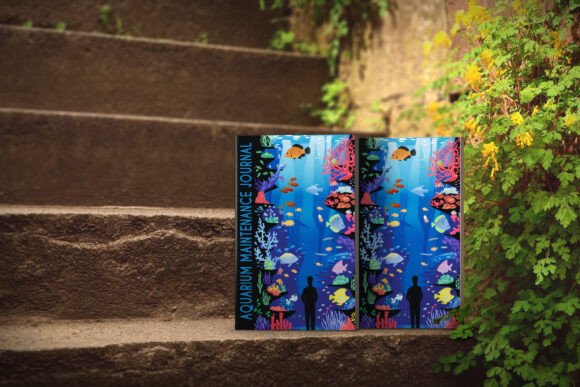
Aquarium Maintenance Journal Cover
Think of the Aquarium Maintenance Journal Cover not as just a book cover—but as the first impression of your commitment to care. It’s the front door to a thoughtful, organized approach to aquarium keeping: a tangible signal that what happens inside the tank matters, and so does how you track it. Designed for clarity and purpose, this cover wraps a 120-page interior sized at 8.5×11 inches—perfectly scaled for writing, sketching, or pasting test strip results without crowding. Printed in black-and-white or premium color options, it avoids bleed for clean, professional edges—and arrives with editable PSD files so you can personalize tone, branding, or layout before printing.
Why This Cover Matters—Depending on Who You Are
For a beginner setting up their first 10-gallon betta tank, the cover is quiet reassurance. It says, “You don’t have to guess. You can record, reflect, and improve.” They might open it to log their first water change, note cloudiness after feeding, or circle the date they finally got stable pH readings. The simplicity of the design—no clutter, no jargon—means less intimidation and more action.
An experienced aquarist managing three planted tanks and a saltwater nano reef uses the same cover differently. To them, it’s part of a system—not just documentation, but continuity. They flip to the back to compare nitrate trends across seasons, cross-reference algae blooms with filter media changes, or annotate plant growth rates beside CO₂ injection logs. The consistent size and spine-friendly binding mean it sits neatly beside hydrometers and dosing pumps—not buried in a drawer.
Creators & Educators: Where Function Meets Story
If you design digital courses on sustainable aquascaping or run a YouTube channel teaching low-tech planted tanks, the Aquarium Maintenance Journal Cover becomes a teaching tool. Its clean, adaptable design lets you brand it with your logo and color scheme using the included PSD files—then offer it as a companion download or physical bonus. Students get structure; you reinforce learning through repetition. One educator shared how her students used blank journal pages to sketch weekly biofilm development on driftwood—turning observation into science literacy.
Freelance designers or small publishers evaluating this cover for client work look beyond aesthetics. They check whether the PSD layers are named logically, if text boxes are editable without distortion, and whether the JPEG preview matches final print dimensions. Speed matters here: being able to swap fonts, adjust margins, or export print-ready PDFs in under 15 minutes keeps projects on schedule—especially when juggling multiple client journals across niches like reptile care or hydroponics.
Small Business Owners & Hobbyist Sellers
A local fish store owner or Etsy seller offering custom aquatic kits might use the cover to unify product packaging. Imagine pairing it with a branded water test kit and a handwritten note: “Your log starts here.” That tactile experience builds trust—and repeat visits. For them, reliability isn’t about durability alone; it’s about consistency across batches. A cover that prints true-to-color every time means customers recognize the journal instantly on social feeds or in-store displays.
They also weigh long-term usefulness against cost. At 120 pages, it supports six months of bi-weekly logs—or two years of monthly notes for a stable, mature tank. No need to repurchase annually. And because it fits standard paperback specs (no bleed, precise trim), it works with most print-on-demand services—reducing inventory risk and setup time.
What Priorities Shape Your Choice?
Different goals call for different features—and the Aquarium Maintenance Journal Cover balances several quietly:
- Ease of use: No complicated templates. Just clear space for dates, parameters (pH, ammonia, temp), and free-form notes—ideal if you prefer writing by hand over apps.
- Flexibility: The PSD files let educators add curriculum-aligned prompts, creators embed QR codes linking to video walkthroughs, or businesses insert seasonal care tips.
- Presentation: Premium color options lend authority—useful for professionals giving talks at aquarium clubs or submitting case studies to aquatic horticulture forums.
- Learning value: Beginners notice patterns faster when data lives in one place: “Every time I skip gravel vacuuming, my guppies hide near the heater.” That insight only emerges with consistent logging.
- Commercial value: For bloggers or course creators, bundling this journal with digital resources creates a higher perceived value—without requiring new content creation.
Does It Fit Your Reality?
Ask yourself: Do you currently lose track of when you last cleaned the sponge filter? Do you forget whether a behavior shift in your angelfish happened before or after adding new java fern? Or do you want to show clients exactly how water parameters stabilized over eight weeks of treatment?
If yes, then the utility isn’t theoretical—it’s daily. This cover doesn’t promise perfection. It supports patience. It honors the fact that thriving aquatic ecosystems aren’t built overnight, but in small, observed steps.
It’s also honest about limits. It won’t auto-calculate ppm or sync to your phone. It won’t replace testing kits or vet advice. What it does do is hold space—for questions, inconsistencies, breakthroughs, and quiet moments of watching bubbles rise through a well-maintained filter. That space is where confidence grows.
Whether you’re sketching root growth on page 47, circling an anomaly in your KH log on page 89, or signing your name boldly on the inside cover as a milestone—this journal meets you where you are. Not as an expert or novice, but as someone who shows up, pays attention, and chooses care over convenience.